🔬 NEW DATA: Afterschool STEM Takes Off!
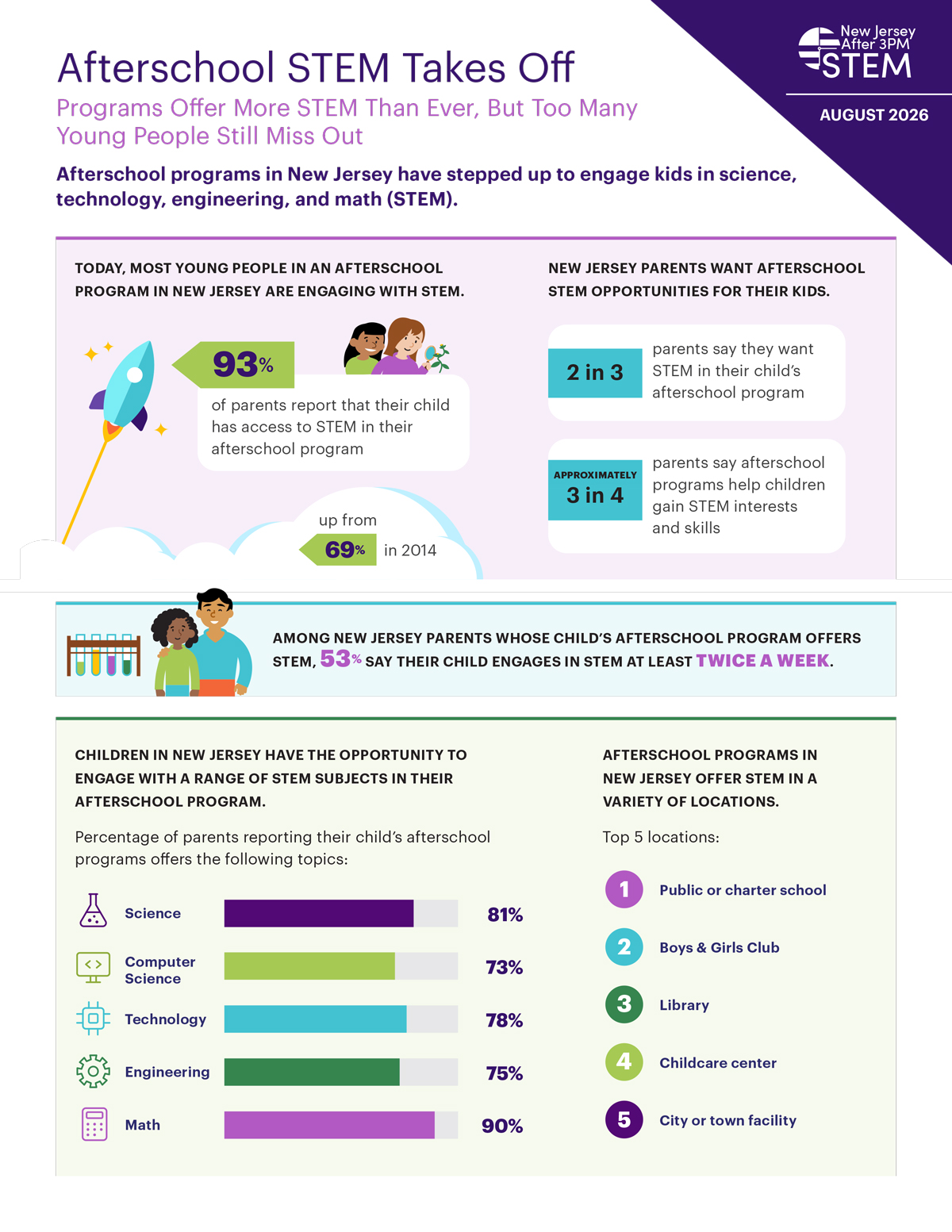
A parent looking for an afterschool program wants a safe environment, caring staff, and engaging activities. Increasingly, that means activities that get their child building, coding, and asking questions about how things work, and afterschool programs have stepped up to meet that expectation by offering more science, technology, engineering, and math (STEM) learning experiences than ever before.
This America After 3PM special report, funded by Overdeck Family Foundation, “Afterschool STEM Takes Off: Programs Offer More STEM Than Ever, But Too Many Young People Still Miss Out,” draws on a decade of America After 3PM data to show parent priorities and expectations for STEM learning, the subjects and skills young people are accessing, and what gaps remain. The five key findings show how far the field has come, and where we need to focus in the coming decade.
- STEM in afterschool has become nearly universal, and parents value it when selecting a program.
A record 92% of parents reported that their child’s afterschool program offers STEM, up from 69% in 2014. Seventy-seven percent of all parents agree these programs help children gain interest and skills in STEM fields, and 65% of parents with children in an afterschool program value STEM when choosing a program.
Parents distinguish among the individual subjects that make up the term “STEM.”
The availability of individual STEM subjects in afterschool programs has grown substantially, but parents place much more emphasis on science and math than on computer science, technology, and engineering; this pattern holds across income, race, and gender.
Rural parents report large gaps in afterschool STEM access.
A majority of rural parents still value STEM when selecting a program, but far fewer report it’s actually available, and just 39% say their child engages with STEM several times a week, compared to 67% of urban parents. The gap is widest in computer science and technology, pointing to a systemic access issue tied to long-standing rural afterschool gaps overall.
Parents of teens want STEM tied to real-world preparation.
Parents place a higher priority on STEM for their high-schoolers overall, and especially for computer science, where importance jumps from 53% among parents of elementary schoolers to 68% among parents of high schoolers. Parents of teens also place high value on college and career exploration, internships, and service learning opportunities.
Parents prioritize afterschool programs that help their children develop social and durable skills.
Parents place a higher priority on programs building confidence, a sense of belonging, communication, teamwork, and critical thinking than on STEM or any other subject. This speaks to a need to contextualize content as a delivery vehicle for the skills parents want most.
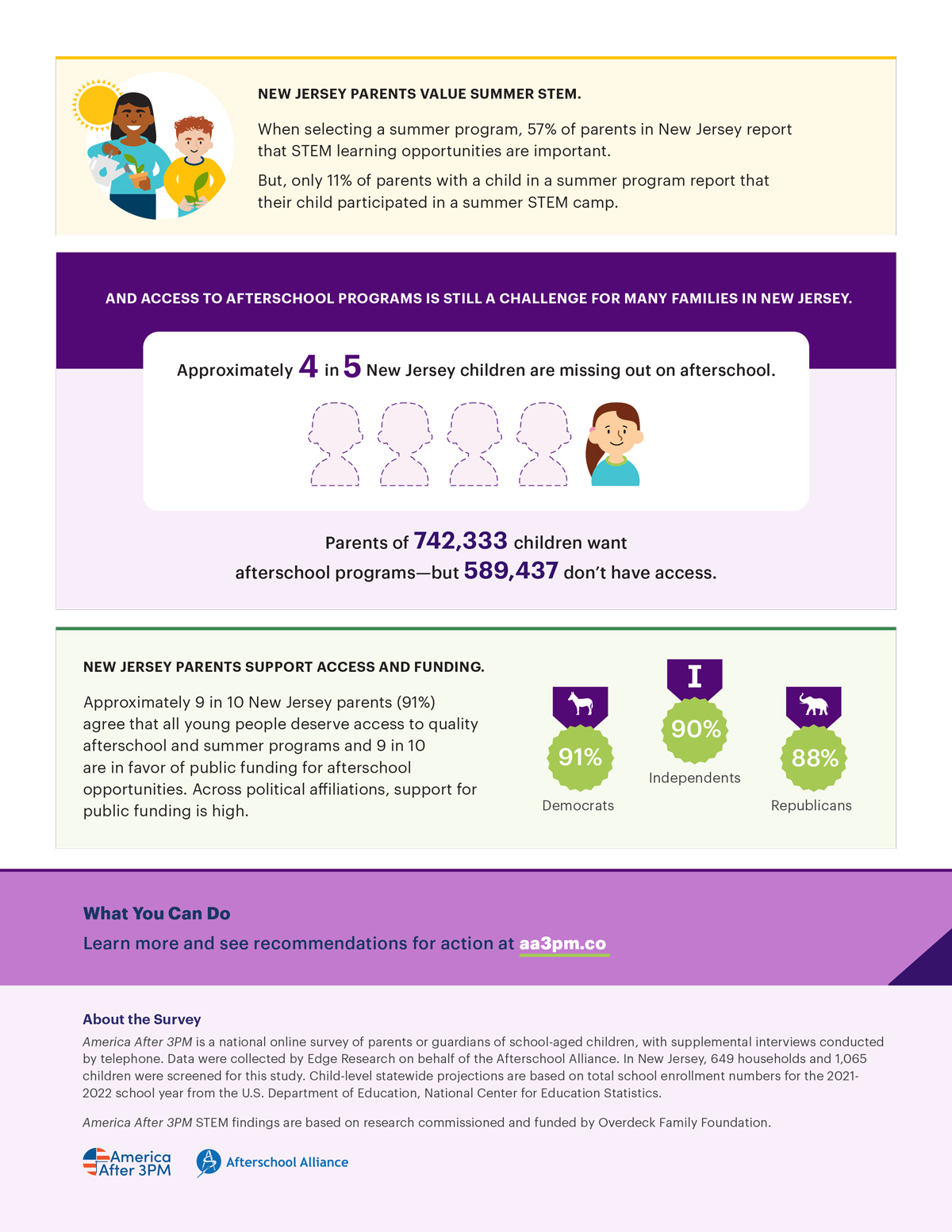
📰 Please Also Check Out This Interview From our CEO Ebony Grace About The Report